
 |
| Qing soldier from the early stage of Taiping rebellion armed with matchlock rifle |
Did Kung Fu Really Matter in the Taiping Rebellion?
Popular culture has created a peculiar image of warfare in nineteenth-century China.
In films, novels and martial-arts folklore, Chinese fighters are often shown charging into battle with swords, spears and extraordinary kung fu skills, even when firearms and artillery are already present. The image is dramatic, heroic and visually powerful.
It is also misleading.
By the time the Taiping War erupted in 1850, firearms had already been part of Chinese warfare for centuries. Muskets, cannon and other gunpowder weapons existed alongside bows, spears, swords and other traditional arms.
The question is therefore not whether traditional weapons were still used.
They certainly were.
Nor is the question whether some of the millions of men involved in the conflict had trained in traditional fighting methods. In a society where local militia, armed associations, village defense organizations and traditional weapons were widespread, it would be surprising if none of them had.
The more interesting question is:
Did kung fu have any meaningful influence on the course of the Taiping War?
That is a very different claim.
The Taiping conflict was one of the largest and most destructive wars of the nineteenth century. It involved enormous armies, fortified cities, artillery, firearms, river fleets, logistics, mass conscription and eventually increasingly sophisticated foreign weapons and military training. Modern scholarship treats the war as an important stage in the transformation of Chinese military organization and technology.
Traditional weapons remained on the battlefield, especially among poorly equipped or irregular troops.
But the presence of swords and spears does not mean that traditional martial arts determined how the war was fought.
That distinction is important, because the Taiping Rebellion has sometimes been drawn into modern martial-arts mythology.
After the historical foundations of many older Shaolin and anti-Qing legends came under increasing scrutiny, real nineteenth-century rebellions offered an attractive replacement. The Taiping movement involved secretive religious organization, anti-Qing warfare, enormous armies and dramatic battles.
It therefore seems like the perfect historical setting for kung fu.
But when we look at the actual weapons, organization and evolution of the war, a rather different picture emerges.
Did Chinese Soldiers Really Use Kung Fu?
What Kind of War Was the Taiping Rebellion?
Calling the Taiping conflict a “rebellion” can almost disguise its scale.
What began in southern China around the religious movement led by Hong Xiuquan developed into an enormous civil war. The Taiping forces captured Nanjing in 1853, established it as the capital of their Taiping Heavenly Kingdom, and controlled or contested large areas of China for years.
This was not a band of rebels hiding in the mountains and occasionally attacking Qing troops.
The Taiping developed armies capable of campaigning across provinces, capturing major cities and confronting the military forces of the Qing state. At one point their advance represented a genuine threat to the survival of the dynasty. The Qing regular forces—the Eight Banners and Green Standard Army—proved increasingly incapable of suppressing them, forcing the government to rely more heavily on newly organized regional armies. The Qing Empire and Its Military
The conflict also occurred during an extraordinary period of crisis.
While the Qing government was fighting the Taiping, other major rebellions were taking place elsewhere, including the Nian Rebellion, while China was simultaneously confronting Western powers during the Second Opium War. The result was not simply another traditional dynastic uprising. It became a vast nineteenth-century war fought at precisely the moment when military technology was changing rapidly. And this is where the story becomes particularly important for martial arts.
China Already Had Guns
One misconception should be removed immediately. The arrival of Western firearms during the nineteenth century did not introduce gunpowder weapons to China. It is widely believed that the Chinese army used only cold weapons until modern times, which is complete nonsense. Chinese armies had been using firearms and artillery for centuries. The Qing themselves had made effective use of firearms during their rise to power and conquest of China. Cannon in particular had been important in earlier Qing warfare. The Qing dynasty inherited Ming firearms technology and, having no real challenges, didn’t invest in further development of firearms, being satisfied with what they already had. On the other hand, technology development was not very fast in other parts of the world, and up to he beginning of the 19th century Ching army was not far behind the western counterparts. Qing firearms
 |
| cavalry matchlock rifles |
 |
| Chinese navy flintlock rifle 1800 |

The problem by the nineteenth century was not that China had no firearms.
The problem was that much of its firearms technology had fallen behind.
For long periods, the Qing had faced enemies against whom its existing combination of bows, traditional weapons, muskets and artillery remained adequate. There was therefore less pressure to continually transform military technology.
Meanwhile, firearms elsewhere continued developing.
By the First Opium War of 1839–1842, the consequences had become painfully obvious. Qing troops still possessed guns and cannon, but much of that equipment represented older technology. British forces brought more modern firearms, artillery, naval technology and steam-powered warships.
China had guns.
What China increasingly lacked were the best guns of its own time.Qing military
A Battlefield Where Different Centuries Met
The Taiping battlefield presents an extraordinary mixture of military technology.
A poorly equipped recruit might carry a bamboo spear.
Another soldier might carry a traditional sword.
Another might use an old matchlock firearm.
Elsewhere there were cannon, muskets, imported percussion rifles, revolvers and eventually more advanced Western weapons.
All of them could exist within the same war
 |
| Taiping army weapons |
 |
| Taiping weapons |
Modernization Did Not Happen Overnight
It would be equally misleading to imagine that Qing commanders simply saw Western rifles, purchased them, and suddenly possessed a modern army.
Weapons are only one part of a military system.
A modern firearm requires ammunition, maintenance, supply, training and appropriate tactics. Large armies require command structures, logistics and officers capable of using those resources effectively.
The Qing's problems went considerably deeper than simply possessing obsolete guns.
Its traditional military institutions were already experiencing serious problems before the Taiping War. The inability of the Banner and Green Standard forces to suppress the rebellion contributed to the rise of regional forces such as the Hunan Army and later the Huai Army.https://www.cambridge university press
 |
| Green Army weapons and equipment |
Foreign weapons and training became another part of this transformation.
The experience of the Taiping War, together with China's defeats against Western powers, eventually helped convince Qing officials that changes in weapons and military training were unavoidable. This became an important foundation for the later Self-Strengthening Movement.
But during the Taiping War itself, old and new continued to coexist.
And nowhere is this transition more visible than in one remarkable military organization:
the Ever Victorious Army.
 |
| Qing infantry man |
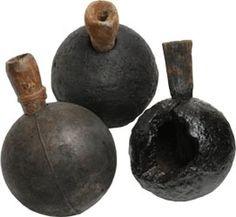 |
| Improvised hand grenades used by both sides in conflict |
 |
| Qing soldiers with a large rifles known in Europe as "Bird Guns" |
 |
| Qing dynasty cannons used by both sides |
 |
| Banner man |
 |
| Enfield 1853 rifle , used by bith side in conflict |

 |
| Needls gun used in a conflict. |
The Ever Victorious Army: Modernization in Practice
One of the clearest examples of this changing military world was the force that became known as the Ever Victorious Army.
Its origins lay in Shanghai in 1860, when the American adventurer Frederick Townsend Ward became involved in organizing forces against the advancing Taiping armies. What began as a relatively small foreign-led force eventually developed into an army composed overwhelmingly of Chinese soldiers, trained and commanded according to increasingly Western military methods.
The Ever Victorious Army is sometimes presented almost as if a small group of foreigners arrived and taught China how to fight.
That is an exaggeration.
The force was relatively small compared with the enormous Chinese armies involved in the war, and recent scholarship cautions against exaggerating Ward's importance to the overall defeat of the Taiping. The much larger regional Chinese armies remained decisive to the outcome of the conflict.
But for our purposes, the Ever Victorious Army is extremely interesting for another reason.
It allows us to watch military modernization happening almost in real time.
A Modern Army Does Not Begin With a Modern Rifle
Ward initially recruited foreign adventurers and other experienced fighters, but he increasingly replaced them with Chinese soldiers trained under foreign officers.
Training mattered as much as equipment.
The soldiers were drilled, organized, paid regularly and trained to use firearms and artillery. The force also made effective use of river transport and gunboats, an enormous advantage in the waterways surrounding Shanghai.
Ward understood something important:
A modern weapon does not automatically create a modern soldier.
A rifle is only one component of a military system.
The soldier must know how to use it. Ammunition must reach him. Officers must know how to deploy their troops. Artillery must cooperate with infantry. Units must maneuver together. Wounded and exhausted soldiers must be replaced. Food, ammunition and equipment must follow the army.
This was military modernization at a much deeper level than simply purchasing foreign guns.
And yet the weapons themselves tell us something fascinating.
From Colts and Sharps to Enfields
The early forces associated with Ward obtained some remarkably advanced firearms.
Among the weapons associated with his men were Colt percussion revolvers and Sharps breech-loading carbines.
These were not simply newer versions of the old matchlock.
They represented a fundamentally different level of firearm technology.
A traditional matchlock required the shooter to manipulate loose powder, projectile and a burning match. It was slow, vulnerable to weather and cumbersome by nineteenth-century standards.
The percussion system eliminated the burning match and made firearms considerably more reliable and convenient.
Rifling improved practical accuracy.
Breech-loading went further by allowing the weapon to be loaded from the rear rather than forcing the soldier to load everything down the muzzle.
The revolver introduced another enormous advantage at short range: several shots could be fired before the weapon needed to be reloaded.
The difference between these weapons and an old matchlock was therefore not simply:
old gun → new gun.
It represented successive changes in ignition, loading, rate of fire, reliability and battlefield handling.
Your original research records this technological mixture particularly well. Ward's early forces had access to revolvers and breech-loading weapons, while the expanding Chinese force later relied heavily on more conventional percussion muzzle-loaders because sufficiently large quantities of breech-loaders were not available.
And that produces another apparent paradox.
Sometimes Modernization Meant Adopting an Older Weapon
As Ward's force expanded into thousands of Chinese soldiers, supplying everyone with expensive or relatively scarce breech-loading weapons became difficult.
Weapons such as British Tower muskets and Enfield-pattern percussion rifles therefore became important.
Compared with the old matchlocks still found in China, these weapons represented a major improvement.
Compared with the most advanced breech-loading firearms becoming available internationally, however, muzzle-loading percussion rifles already represented an earlier technological stage.
Both statements can be true simultaneously.
The weapon could be modern for the army receiving it and already be behind the leading edge of firearm development.
This is one of the reasons the word modernization must be used carefully when discussing nineteenth-century China.
China was not moving instantly from swords and spears to the world's most advanced weapons.
Different units modernized at different speeds.
Different weapons entered China through different channels.
Old equipment remained in service beside new equipment.
And even among imported Western firearms, there could be considerable technological differences.
The Battlefield Was Becoming a System
The Ever Victorious Army also demonstrates why focusing only on rifles misses the larger transformation.
Ward's forces used artillery.
They used steam-powered river transport and gunboats.
They used trained infantry.
They emphasized drill and discipline.
And they could move forces rapidly through the waterways around Shanghai.
Contemporary and later accounts repeatedly emphasize Ward's combination of mobility, firepower and training.
This was much more significant than simply giving a traditional soldier a better gun.
The entire system of warfare was changing.
And after Ward was mortally wounded in 1862, command eventually passed to the British officer Charles George Gordon, whose name became closely associated with the Ever Victorious Army during the final stages of the conflict. The force subsequently cooperated with Qing regional armies in campaigns against Taiping strongholds.
But the Ever Victorious Army should not be mistaken for the force that single-handedly defeated the Taiping.
It was one relatively small component of a much larger transformation occurring within Qing warfare.
Its importance for this article is different.
It gives us a particularly visible example of the direction warfare was moving.
And now we can finally return to the question that started this article:
So Where Does Kung Fu Fit Into This Battlefield?
Traditional weapons had not disappeared.
Swords were still present.
Spears were still present.
Bows were still present.
Close combat still occurred.
And there is no reason to imagine that traditional fighting skills suddenly vanished simply because firearms were becoming more important.
Some soldiers almost certainly brought experience from local martial traditions, militia training, armed associations or other forms of civilian fighting culture into the armies.
But this is where an important distinction must be made.
The presence of martial arts on a battlefield is not the same thing as martial arts determining the battlefield.
A Taiping soldier carrying a spear might have been highly skilled with it.
Another might have received almost no training at all.
A swordsman could still kill someone at close range.
A martial artist could still be useful in particular circumstances.
None of this tells us what was determining the outcome of campaigns involving tens of thousands of men.
Increasingly, the decisive questions concerned things such as firearms, artillery, fortifications, logistics, organization, command, transport and the ability to replace and supply large armies.
That is the context in which we have to judge kung fu's military importance during the Taiping War.
 |
| Colt 44 , popular on both sides of the conflict |
 |
| Colt navy popular on both sides of the conflict |
 |
| Ever Victorious Army |
 |
| Ever Victorious Army |
 |
| Ever Victorious Army |
 |
| Ever Victorious Army |
Obsolete Does Not Mean Useless
It is tempting to look at the technological changes of the nineteenth century and conclude that the appearance of increasingly effective firearms immediately made swords, spears and traditional fighting skills useless.
That would be another oversimplification.
Military technologies rarely disappear overnight.
European armies themselves continued carrying swords and bayonets long after firearms had become their primary weapons. Cavalry sabres survived well into the age of repeating rifles. Bayonet training remained part of military instruction into the twentieth century.
A weapon can cease to be decisive without becoming completely useless.
That distinction is important when discussing Chinese martial arts during the Taiping War.
Firearms Still Had Limitations
Even the more advanced firearms of the 1850s and 1860s were nothing like modern military rifles.
Many weapons were still muzzle-loading.
Rates of fire were limited.
Black-powder weapons produced enormous quantities of smoke.
Ammunition had to be transported and supplied.
Weapons could malfunction.
Different units might possess completely different types and qualities of firearms.
And many Chinese troops were still equipped with considerably older weapons.
Under those conditions, close combat remained possible.
If opposing forces closed the distance, if troops assaulted a fortified position, if fighting entered streets or buildings, or if a soldier could no longer effectively use his firearm, a blade or other close-combat weapon could still matter.
The firearm had transformed warfare.
It had not yet eliminated close combat.
A Spear Does Not Prove Kung Fu
This leads to another problem when discussing martial arts and historical warfare.
When we see a nineteenth-century Chinese soldier carrying a spear, sword or other traditional weapon, it is tempting to imagine that we are looking at a highly trained kung fu practitioner.
We may not be.
A weapon and a martial-art system are not the same thing.
A conscript can be taught to thrust a spear without spending years studying a traditional martial art. A soldier can learn several practical methods with a sword without belonging to a famous style. Military drill can teach functional weapon use without forms, lineage stories or the training structure we now associate with traditional kung fu.
Your original article itself describes large numbers of poorly equipped Taiping recruits carrying bamboo spears and receiving little effective training.
Their possession of spears therefore cannot be used as evidence that sophisticated martial arts were central to Taiping military success.
At the same time, the opposite conclusion would also be unjustified.
Some soldiers undoubtedly had considerably more experience.
China possessed long traditions of local militia, armed communities, military families, bodyguards, martial teachers and civilian weapon practice. It would be unreasonable to assume that none of this knowledge entered the armies of such an enormous conflict.
The question is not whether martial skills were present.
The question is what level of warfare they could influence.
Individual Combat and Warfare Are Different Problems
A skilled fighter can matter enormously when facing another individual.
That does not mean his skill determines the outcome of a battle.
This distinction sometimes disappears in martial-arts discussions.
Imagine an exceptionally skilled swordsman standing among thousands of soldiers.
At close distance he may be extremely dangerous.
But his personal skill cannot stop artillery.
It cannot supply an army.
It cannot breach a fortified city.
It cannot transport thousands of soldiers.
It cannot compensate for incompetent command.
And it cannot overcome an opposing force simply because that force possesses superior firearms, organization, logistics and tactical positioning.
The larger the scale of warfare becomes, the less decisive individual fighting ability generally becomes.
This does not diminish martial skill.
It simply places it in the correct context.
A martial art can be extremely effective at solving the problem it was designed to solve while being almost irrelevant to an entirely different problem.
Fighting another person and winning a war are not the same problem.
Kung Fu May Have Mattered Most Away From the Main Battlefield
There is another possibility that deserves more attention.
If we look only at major battles, we may actually be looking in the wrong place for the historical importance of traditional martial arts.
The Taiping era produced enormous social disorder.
Armies moved through populated areas. Local communities organized defenses. Banditry, rebellion and political violence existed alongside formal military operations. People needed to protect families, villages, property and transport.
In that environment, civilian martial skills could still have considerable practical value.
A spear in the hands of a village defender is solving a very different problem from a spear in the hands of a soldier facing artillery and organized rifle fire.
Likewise, a traditional fighting system might be useful for personal protection, local militia activity, escort work, policing or small-scale violence even when it had little influence on the outcome of major military campaigns.
This distinction may help explain something important about the later development of Chinese martial arts.
Perhaps we have spent too much time looking for kung fu on the battlefield, when much of its practical history belonged somewhere else.
Martial Arts Were Not Necessarily Military Arts
Today the words martial arts can encourage us to imagine that traditional fighting systems must originally have been battlefield systems.
But many of the problems addressed by civilian fighting arts are very different from those of organized warfare.
A civilian may need to defend himself at close distance.
A bodyguard may need to protect another person.
A village militia may need relatively simple weapons that can be learned and maintained locally.
A criminal may need a concealable weapon.
A sailor may turn a working tool into a weapon.
A soldier fighting as part of an organized army faces an entirely different set of requirements.
This distinction becomes particularly interesting when we look at the development of Southern Chinese martial arts during the nineteenth century.
The Taiping War did not necessarily make traditional fighting skills disappear.
Instead, it may help us understand why their military importance and civilian importance increasingly followed different paths.
And that brings us to the larger question behind this article.
The Taiping War Did Not Prove the Power of Kung Fu
People certainly fought with traditional weapons during the Taiping War.
Some participants almost certainly possessed traditional martial training.
Close combat still existed.
Traditional weapons remained useful under particular circumstances.
None of this is controversial.
But none of it demonstrates that kung fu played a decisive role in the Taiping Rebellion.
The military history points in another direction.
The conflict increasingly demonstrated the importance of firearms, artillery, organization, logistics, regional armies, foreign weapons, military training and technological adaptation.
And perhaps that is the real importance of the Taiping period for the history of Chinese martial arts.
It was not the moment when kung fu proved its importance on the battlefield.
It was part of the historical period in which the battlefield was increasingly moving beyond the kind of problems traditional martial arts were designed to solve.
 |
| Qing Tropes training Europan military tactics |
What the Taiping War Really Tells Us About Kung Fu
The Taiping War is important to the history of Chinese martial arts—but perhaps not for the reason usually imagined.
It does not provide us with a nineteenth-century golden age in which kung fu masters decided battles through superior fighting skills.
Instead, it shows us something much more interesting.
It shows us a world in transition.
Traditional weapons existed beside matchlocks. Matchlocks existed beside percussion muskets. Muzzle-loading rifles existed beside breech-loaders and revolvers. Chinese cannon existed beside increasingly sophisticated imported artillery. Traditional military institutions existed beside newly organized regional armies and foreign-trained forces.
Several generations of military technology were occupying the same battlefield.
And in the middle of all of this stood traditional martial arts.
They had not suddenly become useless.
A sword could still kill.
A spear could still be effective.
A skilled fighter remained more dangerous than an unskilled one.
Traditional fighting methods could still have considerable value in personal violence, local defense, militia activity and particular situations of close combat.
But the battlefield itself was changing.
The decisive military questions were increasingly being answered by firepower, artillery, organization, logistics, transportation, industrial production and the ability to train and equip large numbers of soldiers.
No amount of individual martial skill could reverse that transformation.
The Wrong Question
Perhaps this is why asking whether the Taiping rebels “used kung fu” is ultimately the wrong question.
Of course some of them probably did.
Millions of people were drawn into the conflict. Traditional weapons were widely used, particularly among poorly equipped forces, and martial practices existed throughout Chinese society.
Finding a martial artist in such an enormous war would tell us very little.
The important question is whether traditional martial arts constituted a significant military technology capable of shaping the course of the war.
The evidence does not suggest that they did.
And this distinction matters far beyond the Taiping Rebellion.
Martial-arts history has often searched for legitimacy on battlefields.
If a style can be connected to soldiers, rebels, generals, secret societies or famous wars, that connection is sometimes treated as proof of its effectiveness or historical importance.
But association is not evidence of causation.
A soldier practicing a martial art does not mean his martial art won his battles.
A rebel carrying a sword does not mean swordsmanship determined the rebellion.
And the presence of traditional weapons does not turn nineteenth-century warfare into a kung fu story.
Kung Fu Survived Because It Still Had Other Problems to Solve
Perhaps the more interesting historical question is not why kung fu disappeared from warfare.
It is why it didn't disappear altogether.
Traditional martial arts continued developing and being transmitted even as the military battlefield increasingly moved toward technologies against which individual fighting skill offered little answer.
That suggests that their survival depended upon other functions.
Personal protection.
Local security.
Civilian violence.
Bodyguard and escort work.
Community organization.
Physical training.
Competition.
Performance.
Lineage identity.
And eventually, preservation of cultural tradition itself.
Different martial arts may have occupied different combinations of these roles.
This is important because it changes the way we investigate their history.
Instead of automatically asking:
“Which army used this martial art?”
we might ask:
“What problem was this martial art actually designed to solve?”
That question may tell us considerably more.
From Battlefield Technology to Martial Tradition
The Taiping War ended in 1864.
Chinese military modernization did not.
The lessons of the Taiping conflict, together with China's confrontations with Western powers, contributed to increasingly serious attempts to acquire foreign weapons, establish arsenals, build modern ships and reorganize military training during the later nineteenth century.
The technological distance between traditional martial arts and modern warfare would continue to grow.
But kung fu survived.
That survival should not be treated as evidence that traditional martial arts remained decisive battlefield technologies.
It tells us something different.
Chinese martial arts adapted to a world in which the battlefield no longer needed them in the way martial mythology sometimes imagines.
Understanding what happened next may ultimately be far more important to kung fu history than trying to place legendary martial artists into nineteenth-century battles.